2026-11-12 · Marcus Reed
Steps to Dry Out Water-Damaged Flooring in Augusta Homes
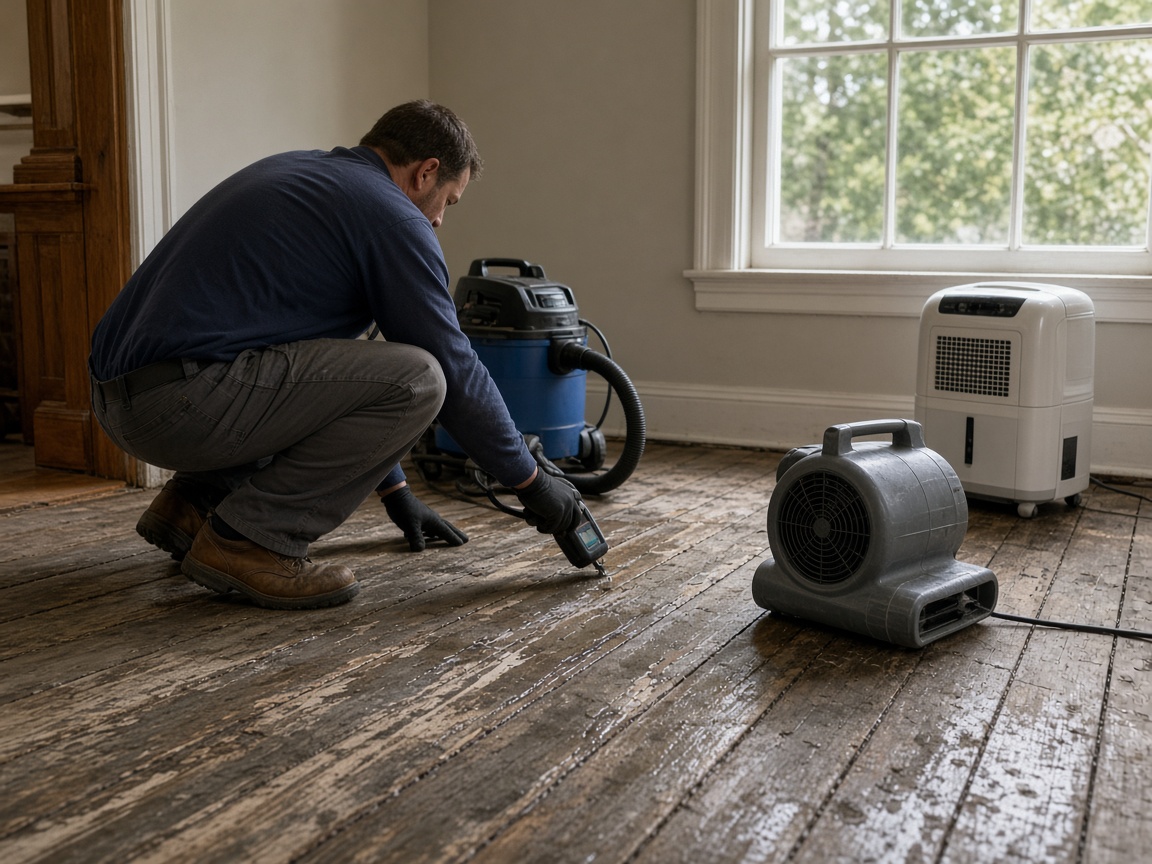
Drying water-damaged flooring in Augusta homes typically requires 3–7 days of active extraction and dehumidification before moisture readings stabilize below 12 percent, though timelines extend in humid summers when relative humidity stays above 70 percent. Older homes in neighborhoods such as Summerville, Downtown Augusta, and Hillcrest often feature hardwood over crawl spaces or slab foundations that trap moisture longer than newer construction in Martinez or Gracewood. Richmond County's mild winters reduce freeze-thaw risks but increase condensation issues during temperature swings. The following process focuses on flooring-specific drying techniques that account for these local conditions.
Assess Flooring Type and Moisture Extent
Begin by identifying the flooring material and measuring moisture penetration with a pin-type meter. Hardwood planks common in 1940s–1960s homes along Wheeless Road and Turpin Hill absorb water differently than laminate or tile found in Richmond Hill properties. Lift baseboards in affected rooms to check subfloor edges, because water often wicks 12–18 inches beyond visible damage. In Lake Aumond and Old Town areas, where many homes sit near Phinizy Swamp Nature Park, elevated water tables can push moisture upward through slabs, requiring readings at multiple depths. Document initial readings in each room before any drying begins so progress can be tracked accurately over the next several days.
Extract Standing Water Immediately
Remove pooled water within the first 24 hours using a wet vac or portable extraction unit rated for at least 150 cubic feet per minute. In Augusta’s hot summers, standing water on hardwood can cause cupping within 48 hours when temperatures exceed 90 degrees. Focus extraction along seams and under appliances in kitchens and bathrooms, where leaks frequently originate. Homes near Riverwalk Augusta or James Brown Arena sometimes experience street flooding that enters through door thresholds, so check exterior grading before finishing this step. Repeat extraction passes until no visible water remains on the surface.
Deploy Air Movers and Dehumidifiers
Position air movers at 45-degree angles along walls to create airflow across the floor surface, using one unit per 100–150 square feet. Pair them with commercial dehumidifiers that maintain 30–40 percent relative humidity inside the containment zone. Augusta’s humid subtropical conditions mean standard household fans alone cannot pull enough moisture from subfloors, especially in crawl-space homes common in Summerville. Run equipment continuously for the first 48 hours, then cycle based on daily moisture readings. Place plastic sheeting over vents in multi-story homes to direct conditioned air downward and prevent redistribution of humidity from upper levels.
Monitor and Adjust Drying Progress
Take moisture readings every 12 hours at the same marked locations to confirm the floor is drying uniformly. When readings drop below 12 percent and stay stable for 24 hours, reduce air mover speed and raise dehumidifier set points to avoid over-drying that can crack older hardwood. In neighborhoods like Hillcrest with clay-heavy soils, residual ground moisture can re-enter slabs during mild winter rains, so continue monitoring for an additional 48 hours after equipment is removed. If readings plateau above target levels, inspect for hidden pockets under cabinets or in closets.
Address Secondary Moisture Sources
Check HVAC returns and ductwork for condensation that can re-wet flooring after initial drying, a common issue in Augusta homes during humid months. Seal minor gaps around plumbing penetrations with silicone to limit future wicking. For homes in flood-prone zones near Phinizy Swamp Nature Park, consider elevating stored items and improving exterior drainage to reduce recurrence. Review seasonal patterns in the CSRA by reading What to Check After Heavy Rains in the CSRA for additional prevention steps. Professional water damage restoration teams can install temporary containment barriers when multiple rooms are affected simultaneously.